## A Rare Glimpse Inside an Edwardian Couture Workroom
**Paris Collar Toiles Made for L. P. Hollander & Co.**
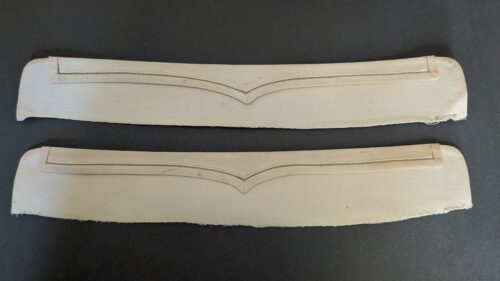
There are moments in the antique world when a piece does more than simply survive — it quietly preserves the very process of its making. This remarkable pair of early 20th-century collar toiles is one of those moments.
Created in Paris between approximately 1905 and 1915, these original samples were made expressly for L. P. Hollander & Co., the prestigious Boston and New York fashion house known for importing the finest Paris couture to discerning American clientele. In an era when fashion flowed from the ateliers of Paris to the wardrobes of America’s most stylish women, Hollander stood among the respected conduits of European elegance.
What makes these collars especially compelling is not just their beauty, but their purpose.
The Quiet Language of the Atelier
Both collars are fashioned from a fine linen or linen-cotton toile — the traditional material of the couture workroom. Toiles were never meant to be the final garment. Instead, they served as prototypes, allowing designers and clients to study cut, proportion, and line before committing to costly finished fabrics.
Here, the workmanship speaks softly but clearly:
* Delicate drawn-thread detailing along the upper edge
* A gracefully shaped V front typical of the Edwardian silhouette
* Careful hand overcasting along the lower edge
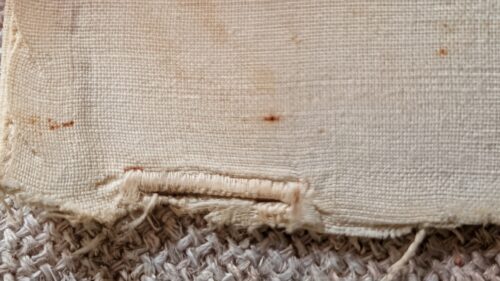
* And most telling of all — a partially cut buttonhole on one collar
That unfinished buttonhole is the whisper of the workroom. It confirms what seasoned textile lovers immediately suspect: these were presentation or fitting samples, not completed retail pieces.
## Paris to America: Fashion’s Elegant Bridge
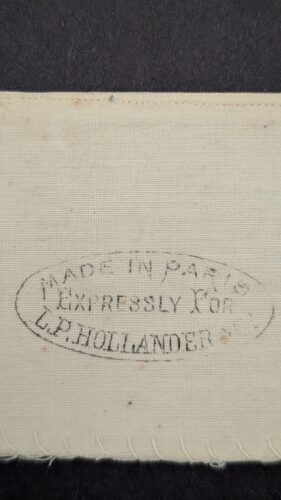
Each collar bears the hand-stamped mark:
**“Made in Paris Expressly for L. P. Hollander & Co.”**
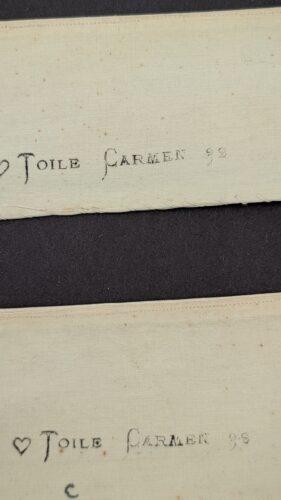
During the Edwardian era, this phrase carried real weight. Paris ateliers routinely produced such samples for American fashion houses, who would then reproduce or adapt the designs for their own elite customers. These humble toiles were working tools — used, studied, and typically discarded once their purpose was fulfilled.
That is precisely why surviving examples are so scarce.
To hold them today is to glimpse the hidden machinery of early 20th-century couture — the careful planning behind the polished garments that defined Edwardian refinement.
## Why These Pieces Matter
Collectors often encounter finished collars and garments from the period. What is far rarer is evidence of the design process itself.
These collars preserve:
* The handwork of the Paris atelier
* The business relationship between French couture and American retailers
* The practical steps behind Edwardian garment construction
* And the quiet artistry of work never meant for the spotlight
They are, in the truest sense, behind-the-scenes survivors.