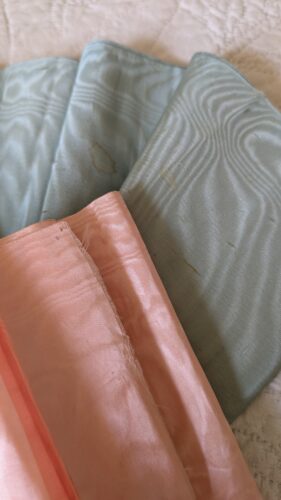
In the quiet glow of an Edwardian sewing room, ribbons like these would have whispered across the hands of a skilled milliner or seamstress, their soft silk sheen catching the morning light. Today, they arrive to us as delicate remnants of a bygone era, a tangible link to the artistry and refinement of the early 1900s.
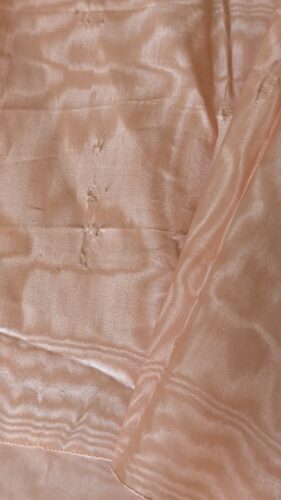
Offered here are two enchanting examples of **silk moiré taffeta ribbons**, one in a gentle blush pink and the other in pale, dreamy blue. Both exhibit the signature **“watered” effect** of moiré, where the silk’s lustrous waves shimmer subtly as the fabric moves. It’s a finishing technique prized for its ability to add depth, texture, and quiet opulence to even the simplest trimming.
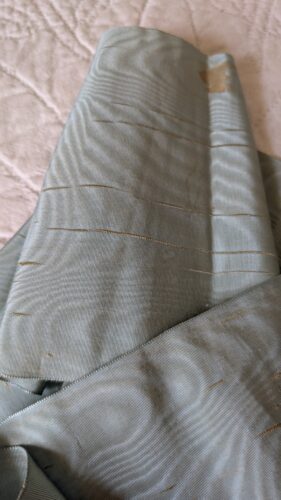
The pink ribbon speaks of softness and grace, perfect for sashes, hat bands, or delicate garment accents. The blue ribbon, adorned with tiny scattered slubs resembling glimmers of gold or metallic thread, carries a slightly more dramatic air, hinting at the attention to detail in Edwardian adornment. These small irregularities were intentional, a testament to the artisan’s eye for surprise and refinement.
During the years **1900–1915**, wide silk ribbons like these were staples in millinery and dressmaking. They could be tied into bold bows, wrapped elegantly around hats, or used to highlight the drape of a gown. Fragments were often treasured, saved carefully for future projects, which makes surviving lengths today both rare and desirable.
For collectors, textile artists, and lovers of history, ribbons like these are more than materials—they are stories woven in silk, offering a glimpse of everyday luxury from over a century ago. Even with minor age marks, wear, and soft creasing, these ribbons carry their original charm, ready to inspire **historic sewing, decorative display, or creative reimagining in modern projects**.
In the hands of a new admirer, the blush pink and pale blue moiré ribbons continue their silent dialogue with light and movement, bridging Edwardian elegance and contemporary appreciation.