There was a time when a hat was never just a hat.
It was an announcement, a finishing touch, a quiet declaration of taste—and just as importantly, it was an experience. From the moment it was selected to the way it was boxed, wrapped, and carried home, millinery was steeped in ritual and refinement.
The pieces gathered here—boxes and signage spanning from the 1920s through the mid-century—offer a glimpse into that world, where presentation mattered as much as the hat itself.
### A Skyline in a Hat Box: 1920s Style Meets Sentiment
One of the most striking pieces is a 1920s hat box crowned with bold, graphic flair. Its lid—decorated with a stylized New York skyline—captures the spirit of a modernizing world. Even partially obscured by a later label, the original lettering (“…ce Charles, New York”) hints at a once-prominent milliner or shop, now softened by time.
What makes this box especially meaningful is its personal history. Connecting generations of women through a shared appreciation for fashion and care, the box was not
discarded. The other boxes, too, became keepsakes in their own right.
### Buffalo, New York Millinery: The Evelyn Page Box
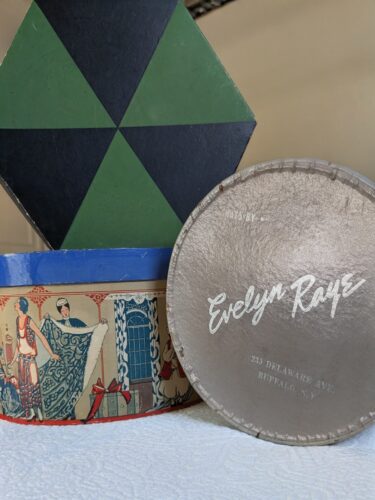
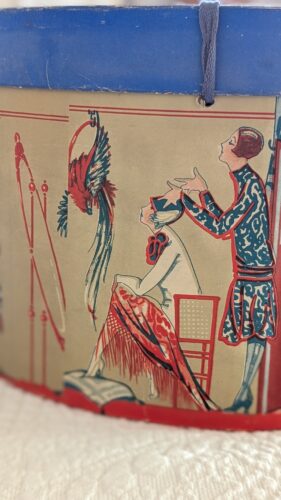
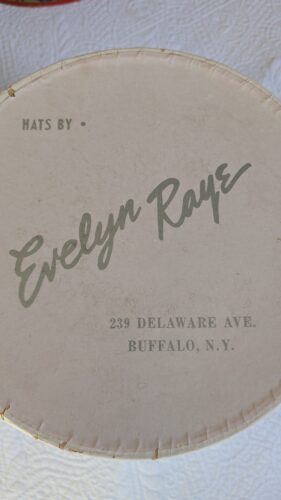
Moving forward a couple of decades, the hat box by Evelyn Page speaks to the continued importance of branding and elegance in mid-century millinery. Likely dating to the 1940s or 1950s, its silver-toned lid and script lettering reflect a more streamlined, modern aesthetic.
Printed with an address on Delaware Avenue, this box anchors itself firmly in Buffalo’s commercial history—a reminder that fine millinery was not confined to New York City, but flourished in regional hubs where style-conscious women sought quality and distinction.
### Geometry & Glamour: The 1930s Deco Fold-Up Box
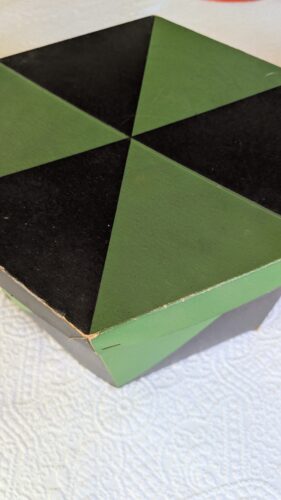
In contrast, the hexagonal fold-up box brings a sculptural quality to the collection. With its bold green and black patterning, it feels unmistakably Art Deco—graphic, confident, and forward-looking.
Though unmarked, its design speaks volumes. Packaging like this didn’t need a label; its modernity *was* its identity. It suggests a time when even utilitarian objects were infused with artistry, reflecting the same design sensibilities seen in architecture, textiles, and fashion of the 1930s.
### Selling the Dream: Millinery Signage
No exploration of hat history would be complete without the language of persuasion—the signage that invited women in and promised transformation.
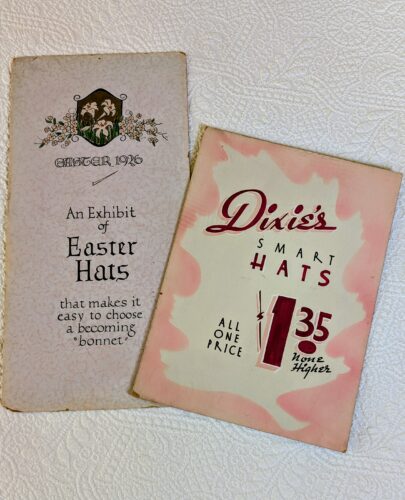
The hand-lettered Easter sign from 1926 is particularly charming. “An Exhibit of Easter Hats that makes it easy to choose a becoming ‘bonnet’”—the phrasing alone feels like a gentle conversation across time. Easter, of course, was *the* millinery holiday, when new hats symbolized renewal and celebration.
Equally compelling is the signage from the Dixie Hat Shop, founded in Buffalo by David Gross. Its bold pricing—“All One Price $1.35 None Higher”—captures a different aspect of retail: accessibility. Here, style was democratized, offered with clarity and confidence to a broader audience.
### More Than Packaging
What ties all these pieces together is the understanding that millinery extended far beyond the hat itself.
Boxes protected and presented. Signs enticed and reassured. Graphics conveyed modernity, elegance, or value. And behind it all were the women who chose these hats—and the ones who carefully saved the boxes afterward.
Today, these objects remain as quiet witnesses. They tell us how hats were sold, yes—but more importantly, how they were *valued*.