Winter has always demanded ingenuity. Long before electric heat, fleece linings, or factory-made cold-weather gear, warmth was something you planned for, patched, knitted, and carried with you. The smallest solutions often mattered the most.
One of my favorite winter inventions was born not in a workshop, but outdoors — and by a child.
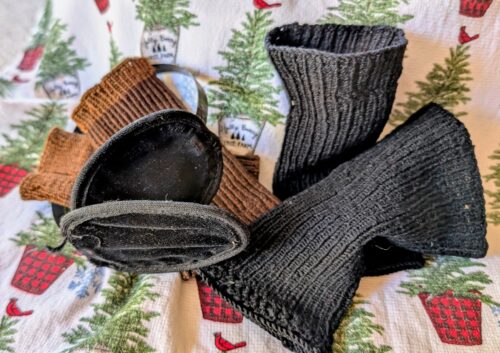
In the late 1870s, a young boy named Chester Greenwood grew tired of cold ears while ice skating near his home in Farmington, Maine. Hats slipped. Scarves were cumbersome. So he bent a loop of spring steel to fit over his head and asked his grandmother to sew soft pads for the ends. What began as a boy’s simple frustration became the first practical ear warmers, later patented and eventually produced in large numbers.
What I love about this story is not the patent or the factory that followed, but the moment itself — a child solving a problem with what was at hand, helped by someone who knew how to sew and mend. These early spring steel ear warmers are wonderfully straightforward objects. There is no excess, no ornament beyond function. They exist solely to protect, to shield, to make winter more bearable.
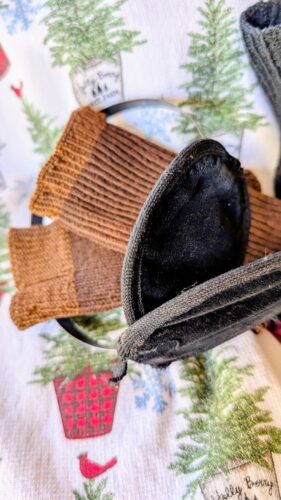
Held today, they still feel personal — shaped for a head, padded for comfort, and quietly effective.
Alongside them, I think of children’s handknitted wool wristlets, another small winter essential. Often made at home, sometimes mismatched, sometimes passed from one child to another, these wristlets provided warmth without the bulk of full gloves. They allowed fingers to remain free for chores, school slates, sled ropes, or pockets warmed by breath. They also served another quiet purpose — helping to keep snow from slipping up coat sleeves during play or work, an everyday nuisance that wristlets managed better than any buttoned cuff.
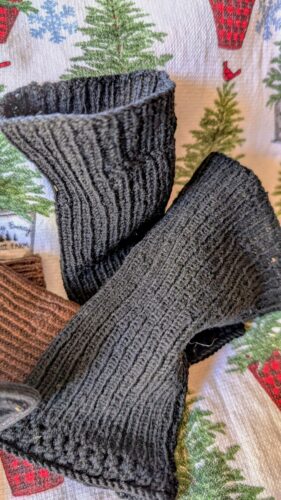
Wool, once spun and knitted, was precious. Wristlets were practical projects — small enough to complete quickly, sturdy enough to endure hard use. Many were re-knit, let out, or repaired as hands grew. Their simplicity speaks of thrift, care, and quiet love stitched into everyday life.
Together, these two objects tell a larger story of winter as it was once lived — not conquered, but managed thoughtfully. Warmth came from clever ideas, patient hands, and the understanding that comfort was built piece by piece.
These are not grand artifacts. They are the kind of things that rarely survived because they were used, worn, and depended upon. And perhaps that is what makes them so deeply human.