There was a time when the dining table was not simply set—it was *composed*.
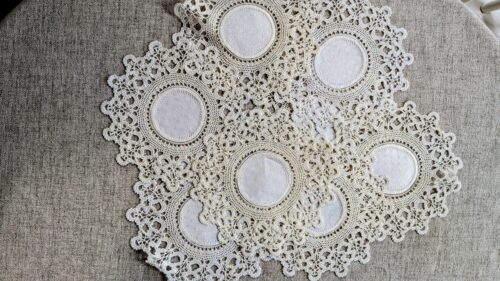
- In the late Victorian era, individual doilies placed beneath dinner and dessert plates were a quiet but essential part of formal entertaining. These small linens protected polished wood and fine cloths, but their greater purpose was visual harmony. Each plate rested upon its own decorative foundation, creating a rhythm across the table that reflected care, order, and hospitality.
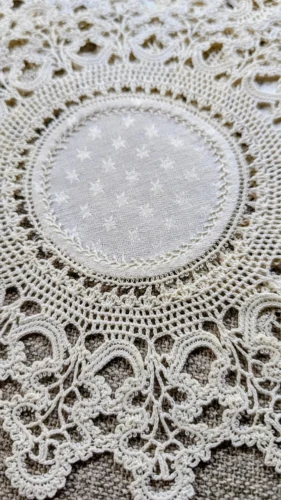
The doilies themselves were no small undertaking. Hand-crocheted lace bordered woven damask centers, often star or geometric patterns chosen for their subtle elegance. After the meal, they would be gathered, soaked, washed, starched, carefully shaped, and ironed—no small task, and certainly not a casual one.
Such practices speak volumes about the households that maintained them. Time, patience, and often assistance were required. These were homes accustomed to guests, courses served in sequence, and the belief that beauty belonged even in the most practical details.
This surviving set, once part of a larger service from a Buffalo, New York family, carries that history forward. Though only a portion remains, the care invested in each piece still shows. Today, they remind us that dining was once an event shaped as much by craftsmanship and effort as by the meal itself.
And yes—one cannot help but pause and think of the washing and ironing.
Collector’s Note:
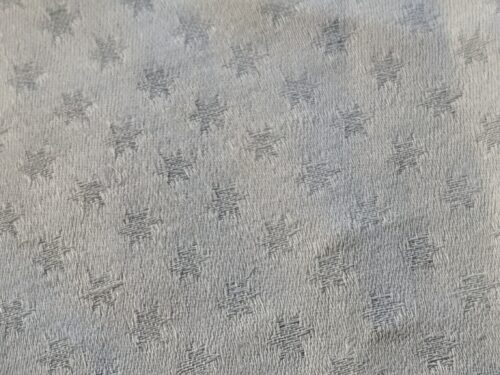
Star-pattern damask is encountered far less frequently than floral or scroll motifs in 19th-century table linens. Its geometric precision required skilled loom work and was typically reserved for higher-quality household textiles rather than everyday use. Such motifs were favored for formal dining and “best” linens, particularly in households accustomed to entertaining with care and ceremony.
While stars were not an official military designation in domestic table settings, the motif carried associations of order, rank, and refinement. As such, star damask linens would have been especially suitable in socially prominent homes, including those of professional or military families, where formal presentation at the table reflected both hospitality and status.