Description
A lovely addition for the sewer, decorator, or collector who appreciates early mid-century trimmings, this vintage Harmony House piece offers the charming color palette and craftsmanship so typical of the 1950s home.
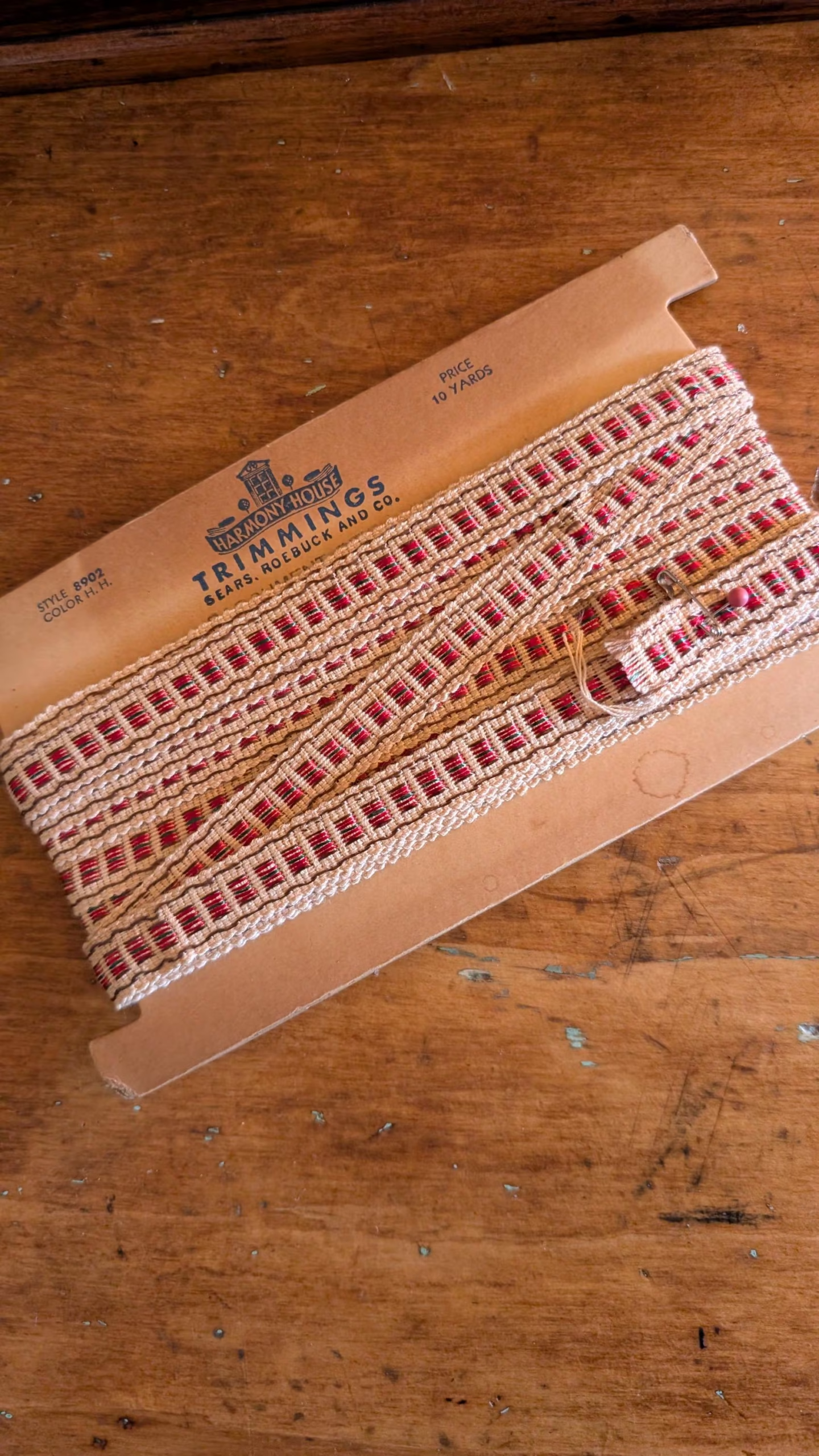
Trim is 5 yards 30″ in length x 1/2″ wide. Unused.
I am pleased to offer this beautiful length of vintage woven trim, still wrapped on its original Harmony House / Sears, Roebuck & Co. card — a wonderful survival from the early mid-century colonial revival era. Harmony House, introduced by Sears in 1940, became one of the company’s signature home-decorating lines throughout the late 1940s and 1950s, celebrated for its coordinated, tasteful domestic textiles.
This particular trim reflects that aesthetic perfectly. Worked in a warm beige cotton-rayon blend with deep red geometric accents, it has the ideal palette for post-war interiors, when muted neutrals were paired with touches of rich color. The pattern is both structured and charmingly simple, making it suitable for a wide variety of uses: drapery edging, slipcovers, pillows, lampshades, valances, chair cushions, or for restoring mid-century upholstery projects.
The card itself helps date the piece to circa early–mid 1950s, possibly late 1940s. Its kraft-brown stock, serif typography, and squared notches for securing the trim correspond closely with Sears’ packaging from this period, before the brighter, more modernistic printed cards of the 1960s came into use.
The trim unused, and the card is marked:
Harmony House Trimmings, Sears, Roebuck and Co.
Style 8902
Color N.H. – Parchment Beige
A delightful find for the collector of mid-century sewing notions or for anyone wishing to bring an authentic 1950s touch to a project. Pieces remaining on their original branded cards are increasingly scarce, making this an especially appealing example.
Collector’s Note
Harmony House trims such as this were part of Sears’ effort to offer complete decorating solutions for the modern homemaker. Sold alongside drapery yardage and coordinating fabrics, these trims were produced in limited seasonal palettes. Their survival on original cards is prized among collectors of mid-century sewing ephemera and 20th-century interior design.